You have an idea for a novel/nonfiction book/stage play/screenplay/book of poetry/book of essays/etc. but you haven’t been able to actually do anything with it.
It sits there. An idea. Going nowhere.
If you don’t activate it soon, you’ll lose interest in it and enthusiasm about it.
You may have any number of excuses for not moving forward and developing your idea. Some of the most common excuses are:
I don’t have time to write.
I don’t know how to write or, I don’t know how to do this kind of writing.
I’m not good with spelling and grammar.
Other people whose works I’ve read are really good writers. Where do I get the nerve to even think that I can write in their space?
This will take me such a long time. Is it even worth it to start?
What if I finish it and it doesn’t get published?
What if it turns out to be awful? I’d be so embarrassed.
What if it gets published or I self-publish it and no one reads it?
Most of these excuses are bullshit, and badass writers don’t indulge in bullshit. Acknowledge them for what they really are: AN EXPRESSION OF FEAR.
I don’t have time to write. There are ways to squeeze writing time into the busiest schedule. I’ll recommend some in another post. But this is probably about you being afraid. If you write TEN MINUTES A DAY, you’ll put it more than an hour a week. You can accomplish a lot in an hour.
I don’t know how to write or, I don’t know how to do this kind of writing. You learn. You learn by doing and by reading about writing. There are MANY resources available to you (including some I offer).
I’m not good with spelling and grammar. Then you write what you want to write and either hire an editor/proofreader or get that smart English major friend of yours to correct your masterpiece for a few beers.
I’ve read books like the one I want to write by really good writers. Where do I get the nerve to even think that I can write in their space? These writers inspired you to write! And keep in mind the fact that they didn’t start out being really good writers. They probably started out feeling just as doubtful about their ability as you do now – BUT THEY DID START.
This will take me such a long time. Is it even worth it to start? That’s something you need to decide. However, wasting time thinking this way will not get you to the finish line any faster.
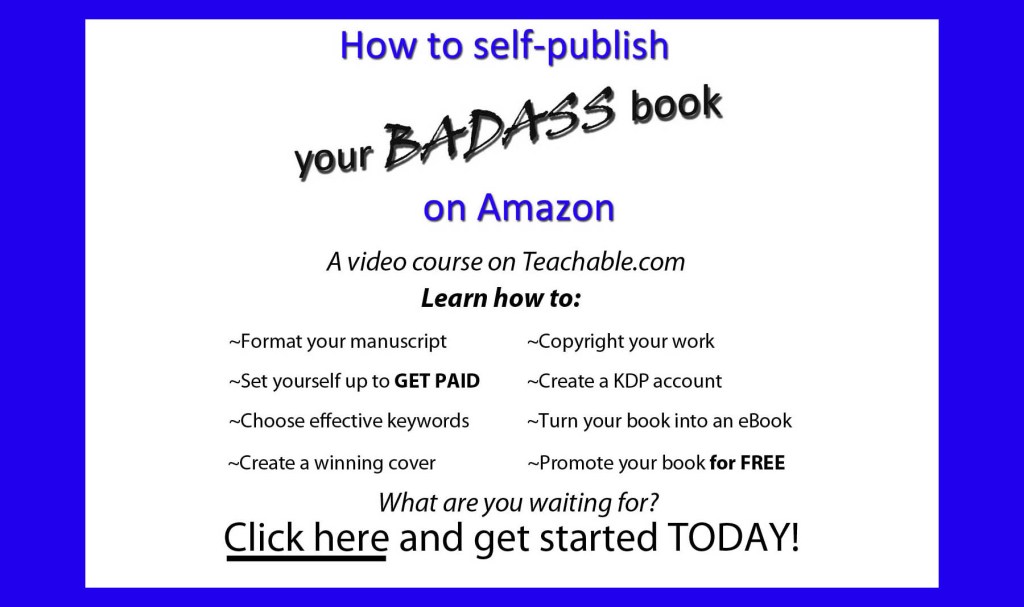
What if I finish it and it doesn’t get accepted by a publisher? Then you self-publish it. (SHAMELESS SELF-PROMOTION ALERT: See my course, How to Self-Publish Your Badass Book on Amazon. It’s on Teachable.com.)
What if I self-publish it and no one reads it? You will have to promote the hell out of it. I cover how to do that in the above-mentioned course.
What if it turns out to be awful? I’d be so embarrassed. There is no limit on the number of times you can revise it. You can continue to improve that. You can hire a co-writer or an editor to help you improve it.
There. There is no excuse for the excuses you’re using to excuse yourself from writing what you want to write.
The title you bestow upon your book will determine whether or not a potential reader…reads past it. An uninteresting, poorly composes title will keep the reader – otherwise known as a buyer – moving right along, to other, better titled books.
Your title must give some indication about what the books is about, but it has to do much more than that. It has to be intriguing. It has to pique curiosity. It has to be like a siren song that draws the right readers to what you’ve written.
What do I mean by “right readers”?
Some writers delude themselves into thinking that literally everyone will be enthralled by what they’ve written. That is never the case. Readers have specific preferences. Someone who has bookshelves full of nonfiction tomes about military history and owns not one single book about vampire erotica (yes, that actually is a category) will not be interested in your book about vampire erotica. Don’t waste time on trying to lure that person in by trying to craft a title they’ll like.
Whatever it is you’ve written, whether it’s nonfiction or fiction, stage plays or poems, essays or graphic novels, there are readers for it. Your title has got to alert them to your work’s existence. Make them excited about it.
Start by studying the titles of other books in your category, especially the ones that are selling well. Are there words or phrases that are used in book after book? Pay attention to that. Book buyers use keywords and phrases when looking for something new to read. You will want to put your own spin on how keywords are used, of course, but keep the popular ones in mind as you compose your title.
As I mentioned earlier, your title should be intriguing in some way. I’ve written a number of stage plays. I decided to pull monologues from them and publish them as a separate book, entitled, Monologues for Actors (that directors aren’t sick of hearing). The title starts out fairly straightforward, then veers into more unexpected territory. Actors who are looking for monologues to use during auditions will get it. Using monologues that are not overly used may cause directors to pay more attention to them.
Some examples
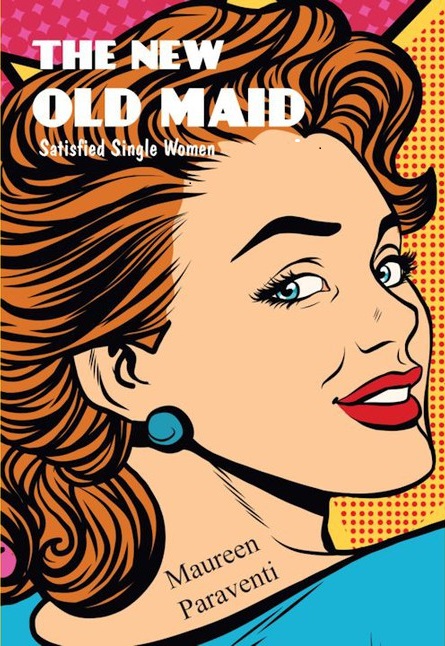
The Rosebud Burglar: a Victorian Romance starts with two words that don’t seem to go together – to provoke curiosity – and follows them up with a description that makes the genre clear (a Victorian Romance). A nonfiction book I wrote has a title that includes a negative stereotype: The New Old Maid: Satisfied Single Woman. But wait! The word “New” signals that something is different about this book. Then “Satisfied Single Women” adds to that perception: something really is different. (And it is! I interviewed never-married women from all over the U.S. and all walks of life and found that they are leading happy, fulfilled lives.)
There’s no shame in click bait
So make your title so interesting that readers/buyers keep reading, and get to the brilliant description of synopsis you’ve written for your book. Make your title shameless click bait. Also- keep it fairly short. Customers are more likely to skim right past titles that are more than 60 characters in length.
Too many wannabe writers stay in that wannabe category because they’re afraid of writing badly. Their internal critic kicks in – often before they’ve even started that writing project that’s been living in their head, screaming to get out.
Fear of failure can hobble you.
Understand that the first draft of anything is rarely good. Often, it’s a mess. If you’re writing fiction, it could be a jumble of cliched characters and ill-conceived plot points. If you’re writing nonfiction, it might be a disorganized presentation of the information you want to provide to readers.
You know where you want to go, but you don’t yet know how you’re going to get there.
Embrace the Mess
Push through your doubt, SHUT YOUR INTERNAL CRITIC UP, and write that first draft in a way that works for you. I like to use a stream-of-consciousness, jot-down-everything-that-occurs to me style. Figuring out how it all will come together comes later. For me. The premise must be in place first. For me.
Your first draft writing style might be different from mine. That’s ok. You might not yet know what your first draft writing style is. That’s ok, too. Experiment.
Whether you want to craft an outline or randomly write down ideas as they occur to you, I encourage you to not try and exert too much control over your material. Give it the freedom it needs to take you to interesting places – places that you may not have anticipated going.
As noted: it’s vital that you shut your inner critic up and get that first draft down. Don’t judge it. Don’t judge yourself when you write it.
Give yourself permission to suck when you write the first draft. It’s only a starting point, but it’s an absolutely necessary starting point.
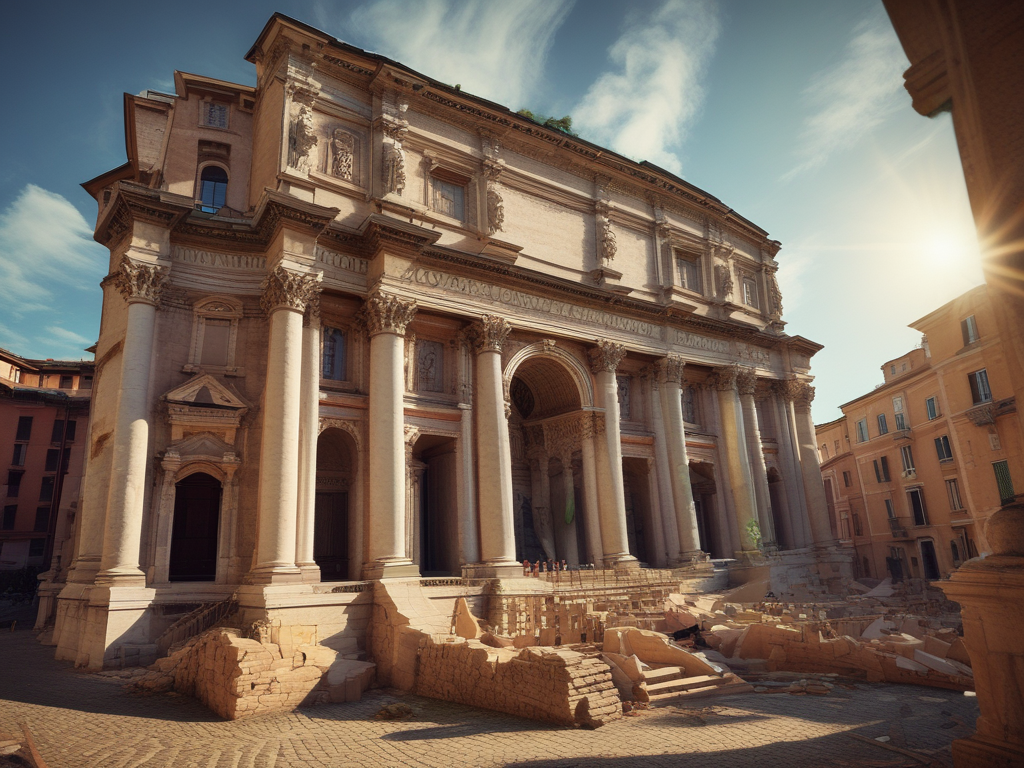
After all, Rome wasn’t built in a day. (You were wondering about that image, weren’t you?)
And by the way, when you have completed your brilliant novel/self-help book/how to book/memoir/nonfiction book:
It took me ten years to finish my first novel*. Ten freakin’ years. This was no Walt Whitman “Leaves of Grass” kind of thing, where I spent the time writing and rewriting, perfecting and fine-tuning and ended up with a masterpiece. No. There were false starts, long breaks and considerable time spent wallowing in self-doubt. Also, I had some fairly impressive excuses:
I moved several times during the novel writing process
I changed jobs
I lost two close family members
And did I mention how I spent time wallowing in self-doubt?
The first three items on the list may seem like legitimate excuses. The fourth – not so much.
It is almost miraculous that after several years-long breaks in the writing action, I was able to revive my initial enthusiasm for my story, go forward with it and finish it. Why? Because an estimated 97 percent of people who begin a novel never finish it. I didn’t just pull this figure out of my ass. I got it from a number of other bloggers, who pulled it out of their asses. Whatever the actual number, it’s a safe bet that many would-be writers of fiction, nonfiction, stage plays and other long-form works never complete their projects.
Are you one of them?
Writing like a badass means finishing your projects: taking a proverbial machete and hacking your way through the jungle of self-doubt in which we all find ourselves from time to time. YOU HAVE AN IDEA. Many people never have an idea, so that alone makes you special. Don’t let it die on the vine. In the jungle.
Enough with the metaphors.
Writing something long is a daunting task. I get it. And there is no guarantee that if you finish it, it will end up a best-seller or a National Book Award winner. So why put yourself through it? Because YOU HAVE AN IDEA. Suppress it or ignore it at your own peril. Regret is painful.
Here are three actionables to help you complete a big, daunting writing project:
Work on it every day. No kidding. Short on time, because you work, work out, drive the kids to soccer practice, blah blah blah? Set an alarm for ten minutes and write for ten minutes a day. Do it at the same time every day, so that the habit gets cemented into your schedule. Eventually, what is likely to happen is that the alarm goes off and you keep writing, because you’ve finally regained your enthusiasm.
Divide your project into small, bite-size pieces. If you’re working on a novel and haven’t created an outline, doing so will help you see it in manageable sections. Outlines are absolutely essential for many kinds of non-fiction books (and yours will come in handy when you are submitting to agents).
Speaking of small, write a short version or section of your very long project. This lets you back into it and helps you avoid that unpleasant feeling of intimidation. It can also be useful in drilling down into details, character backgrounds, plot twists that hadn’t occurred to you. A small version of a very long project can take the form of ~a short story based on your novel ~an article based on your nonfiction book ~ten-minute play based on your full-length play
The most important of these actionables (if you want to write like a badass) is #1. Write every day, even if what you’re turning out is garbage. Sooner or later, it will stop being garbage and start being what you want it to be. Writing every day will also reinforce your identity. If you don’t believe you are a writer, you won’t write.
Not like a badass, anyway.
Now go finish the damn thing.
For those who are curious, that ten-years-in-the-making novel was “Palm Tree Pipe Dreams.” It is a dystopian comedy about what happens in Southern California when traffic finally reaches critical mass and comes to a complete halt. I was never able to find a publisher for it, so I self-published. Click here to find it on Amazon. Even though it didn’t result in commercial success, I love this story and am glad I finished it. I needed the closure. I’m currently adapting it into a screenplay. (Movie production companies: get in touch!)
Do download the checklist that you see below. Don’t necessarily answer the items in the order they’re in. Wha??? (you’re asking yourself) Why not??? (still you)
How to Use the Checklist
Instead of going down the checklist and deciding on details in an orderly fashion, DO IT THE BADASS WAY. Listen to your gut. Go with what you feel strongest about first. For instance, you may not arrive at a name for a character until you’ve figured out what he or she looks like, or eats for breakfast, or fears the most, or dreams about. And notice I used the phrase, “arrive at.” When you are really in tune with your badass writing self, you won’t have to fight to come up with words. They will come to you. They will recognize the badass creative door that you’ve opened for them and make themselves available to you, without any struggle on your part.
Sounds New Age-y, doesn’t it? It’s not. Being a badass means that you will have the confidence as a writer (and a person, generally) to access your imagination. To acknowledge your instincts and let them play out, on the page. To give yourself permission to BE a writer.
You don’t have to supply every detail on this list, either. Write as many descriptives as it takes for your character to emerge as a tangible being – one that you can set in motion, strutting through your story, wreaking chaos or healing heartbreak, suffering misfortune or inflicting harm on others. If age, appearance and a name are enough to fully flesh out your characters, you’re done with the list! Early on, though, it may be helpful to you to complete it, as an exercise. You don’t have to use all of the characteristics you jot down here in your work. They can simply function as subtext – something beneath the surface that informs the writing you do.
Remember that characters change throughout stories. They’re supposed to, in fact: that change is called an arc. For that reason, avoid falling too much in love with the fictional people you create. That could lead to you being rigid and resisting changes when your characters and storylines are telling you that they are needed.
About Stage Plays
It should go without saying (but I’m going to say it anyway): in stage plays, only use physical descriptions that are absolutely essential to the action of the play. (Don’t specify that a character should be tall if their height is irrelevant.) Keep in mind: the audience is not going to be reading the descriptions. Directors and actors are, for casting and character development purposes.
You may include:
Gender, age, race and regional background IF those things are important, such as if a character has a New England accent (that’s where the regional background comes in).
Personality traits and mannerisms, if they are essential to our understanding of the character. “He is an easy-going man who is uncomfortable with conflict.” “She appears eager to please, but there is a barely suppressed rage just beneath the surface.” “Her movements convey impatience.”
About Using Real People as Inspiration
Do it! There is absolutely nothing wrong with basing your characters on people you know – as long as they’re interesting. However, to prevent hurt feelings, make sure you change names and a few essential details, so Uncle Rufus does NOT realize that the foul-mouthed, abusive alcoholic in your story was inspired by him. No sense getting Uncle Rufus on your bad side, or stirring up family drama.
Use yourself, too. What you’ll find, as you progress as a BADASS WRITER, is that even characters that are drawn from your real life – acquaintances, relatives, loved ones – will evolve into composites. In one play I wrote, “The Bucket List of Booze Club,” several of the characters had experiences that mirrored mine, but were also distinctly different from me. Amy, had an emotional a monologue about giving her mother, who had Alzheimer’s, showers, and how her mother seemed so vulnerable at those times, so afraid of falling. My mother had Alzheimer’s. I gave her showers, and tried to allay her fears about falling. However, Amy was also a talented baker who was trapped in a lifeless marriage – neither of which applied to me. Another character, Jen, complained about bad first dates with men she met online. Jen’s hilarious stories were drawn from my bad first dates I had with men I met online! (At least I got something out of them.)
In a novel I wrote, “Palm Tree Pipe Dreams,” the protagonist is a wanna-be screenwriter from the Midwest who is living in L.A. and working as a low echelon, much-abused admin for a successful talent agent. I was a wanna-be screenwriter from the Midwest living in L.A. and working as a low echelon, much-abused admin for a successful talent agent…who also appears in the novel. I changed his name, but kept his self-centered, smug, patronizing personality.
Interested in self-publishing your book on Amazon but have no idea how to do it? Scroll down.
What is their race? I’d love to say that race doesn’t matter, but it does. Usually. It is one of the first things we notice about someone, along with gender and age. Don’t be afraid to assign a specific race to a character, and it doesn’t have to be your race. (See my blog post on the worst writing advice ever.)
What is their gender? Or are they gender fluid, or nonbinary, or transitioning from one to the other, or…?
Describe their physical appearance and the way they present themselves. I added that latter part to keep this as broad as possible. The things you note here can be permanent or temporary, such as short, thin, loves colorful clothes, fat, appears uncertain, balding, voluptuous, has a limp, smiles incessantly, tall, energetic, soft-spoken, confident, weary, etc. Don’t limit yourself to the obvious. (Read my blog post on Badass Character Descriptions That Will Inspire You.)
Family background: Did the character grow up with a single mom, or in a two-parent household, or with two same-sex parents, or with parents of different races/cultures/religions so there were clashes? Were they raised by a grandparent, an only child, a twin, one of many siblings, a middle child, the baby of the family, the oldest one? Did the family moved around a lot, stay in the same house for decades, have lots of stability, have no stability because of…? (Mental illness, substance abuse, etc.) Did they grow up working class, middle class, poor, wealthy? Our childhoods have a profound effect on how we are as adults. Give some thought to the familiar circumstances that shaped your character’s character.
What are some major events in their lives that have affected them? There will be some overlap here with the family background section, and that’s ok. Did a parent die young? Did they adopt a child? Get molested as a child? Win the lottery? Lose the big game? Witness a murder? Get featured on a sports arena jumbotron with a person who was not their spouse? Spend time in prison? Spend time as a caregiver for a loved one? Win a nationwide singing competition? Were they in a car accident that changed the trajectory of their life? Did they do something heroic? Something cowardly?
Where is the character from? What country, or state or region; a big city, a suburb, a small town, a rural area, a remote village. Did they start out in one place and move to another at an impressionable age?
What are they passionate about (if anything)? Hobbies? Interests? Are there activities they’ve always wanted to try, but haven’t yet? Are there things that broke them? Are they passionate about nothing? If so, why? Did an early disappointment in life teach them that embracing things enthusiastically is risky?
What do they love? Who do they love? Why do they love?
What do they fear? What do they dream of?
Who do they admire? Who do they despise? Who do they feel close to?
What are their political or religious beliefs? Do those differ from those of the people in their lives – people who are close to them or who they work with or deal with? Are they contrarians, or do they go along with the crowd?
What do they hope to achieve in life? (Or have they already achieved it?)
What do they regard as their biggest failure? Their biggest success?
How would you describe a character’s relationships with the other characters in your story? Yeah, this gets complicated. Relationships, though, are the beating heart of fiction and drama, so give them plenty of attention. They can be simple, tangled, tortured, dysfunctional, bitter, loving or fractious. They will also change, or be revealed, during the tale you’re telling. Think about the relationships in your own life. The closer you are to someone, the likelier that your relationship with them has many layers, some healthy and supportive, some negative and frustrating.
Is there something about writing that you want to get off your chest?
Is there advice you wish you’d been given or a warning that would have prevented some frustration on your part? (Notice that I said some. If you’re a writer, or going to be a writer, you need to make friends with frustration, because it is going to be at your side and in your head a lot.)
Is there part of my Write Like a Badass approach that you want to call bullshit on? Or has something I’ve read or said helped you in your writing?
Do you get irritated when you read lousy writing that has been published by a major publisher, while your work of genius has gotten rejected again and again?
Want to boast about your success? Tell us how you did it? Rub our noses in it, even?
Do you want to share your knowledge about a particular writing genre? Tell us why you love writing antebellum vampire cozy mystery comedies or nonfiction books about bringing feng shui to closets?
Want to tell people how you successfully promoted your self-published book?
Do you feel like your work is being overlooked because it represents a viewpoint that is not mainstream (whatever that word means)?
Would you like to tell us why your membership in a writers’ group that meets and critiques has been worthwhile or a waste of time?
Do you just need to vent about the writing life?
Whatever writing topic is burrowing in your mind right now, squirming to get out and see daylight, might make a damn good post. By damn good, I mean something that would, in some way, be beneficial to the people who read this stuff. Both good and bad experiences offer useful lessons, so feel free to get ugly with it. Badass writers aren’t afraid of ugly.
Why bother? Putting your writing out there on a public forum is risky. That’s good for you. You will be engaging with your fellow writers, who will, in all probability, comment on your post. There’s a good chance that some commentors will be supportive. YOthers will not. Some will likely be negative, and that’s good. It will give you practice in dealing with criticism.
Write a blog post and send it to me. If it’s any good, I’ll post it and let you know that I’ve posted it.
-Give me 300 to 1,000 words. -Use your real or name or a pseudonym. -Link to you own website or social media if you want to. (NEVER miss an opportunity to promote yourself.) -Include a photo of yourself if you want to.
Send your blog post to: howtowritelikeabadass@gmail.com. When you do that, you give me the right to post your piece on my blog, but you retain ownership of it.



 Write Like a Badass